The USC Humanities Collaborative sponsors two internal faculty fellowship programs to support researchers who are producing innovative and impactful humanities scholarship. Faculty Fellows attend a monthly colloquium and writing retreat, and each is asked to make an intellectual contribution to the Humanities Collaborative (such as giving a research presentation, facilitating a book discussion, or organizing a workshop).
Faculty Research Fellowships provide tenured faculty with dedicated time through one course release to advance their research and writing on a major project.
First Book Research Fellowships provide tenure-track faculty with ongoing mentorship and the opportunity to workshop their first book manuscript on campus with colleagues and invited experts in their field.
Research Faculty Fellows 2026-2027
Greg Forter

Greg Forter is a Professor in the Department of English Language and Literature, where he teaches courses in American literature, Global Anglophone literature, Postcolonial literature, Ecocriticism, and critical theory. He has published three monographs: Murdering Masculinities: Fantasies of Gender and Violence in the American Crime Novel (New York UP, 2000); Gender, Race, and Mourning in American Modernism (Cambridge UP, 2011); and Critique and Utopia in Postcolonial Historical Fiction: Atlantic and Other Worlds (Oxford UP, 2019).
Greg’s recent articles have appeared in The Cambridge Journal of Postcolonial Literary Inquiry, Diacritics, Cultural Critique, Angelaki, Criticism, and American Literary History. In 2027, Northwestern will publish his just-finished monograph, Capitalism’s Other Times: Fiction, Speculation, and Futurity. During the fellowship year, Greg will embark on a new book project called “Capitalist Post-Realism: Labor and the Novel in the Ruins of Neoliberalism.” The project examines the new aesthetic strategies developed by novelists trying to make sense of the social and economic transformations of the past decade.
Marko Geslani
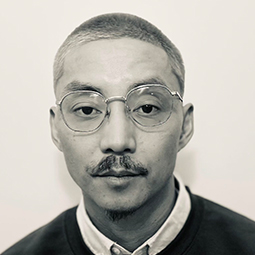
Marko Geslani is Associate Professor in the Department of Religious Studies, where he is a Sanskritist and critic of Orientalism. He teaches courses in Asian religions, theories of religion, race and religion, and critical humanism in the Department of Religious Studies. His research embraces two general themes: the political theology of the Brahmanical state in medieval South Asia and the legacy of Orientalism in the academic study of religion.
His first book, Rites of the God-King: Śānti and Ritual Change in Early Hinduism (OUP 2018), is a study of the collaboration between astrologers and Vedic ritualists in medieval South Asian state ceremonial. As a fellow with the USC Humanities Collaborative he will be completing his current book project, Model Minority Religion: Religious Studies after Said, a cultural critique of US based religious studies from the 1980s to the 2000s, which situates the study of classical Asian religions in relation to Cold War projects of racial assimilation and the rise of postcolonial studies.
Saskia Coenen Snyder
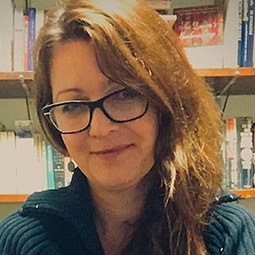
Saskia Coenen Snyder is Professor of Modern Jewish History in the Department of History, where she holds the Edward B. Cantey, Jr. Chair in Liberal Arts and serves as Director of the Jewish Studies Program. She received her doctorate at the University of Michigan in 2008. Her first book, Building a Public Judaism: Synagogues and Jewish Identity in Nineteenth-Century Europe (Harvard UP), examined synagogue architecture and building practices in London, Berlin, Amsterdam, and Paris.
Her second monograph, A Brilliant Commodity: Diamonds and Jews in a Modern Setting (Oxford UP) explained the prominence of Jewish merchants, entrepreneurs, and lapidaries in the global diamond industry. She is currently working on her third monograph, Under Pressure: Producing Diamonds for Nazi Germany, which traces the international diamond trade during WWII and the Holocaust.
Dr. Coenen Snyder’s work has been published by American, British, German, and Dutch University Presses, but she also writes for local audiences — she is a regular contributor to the South Carolina Council’s annual edition, The Holocaust Remembered. She has been a Residential Fellow at the Netherlands Institute for Advanced Study in Amsterdam and a European Holocaust Research Infrastructure Fellow at the Dutch Institute for War Documentation, where she collected materials on the diamond industry during the Nazi occupation. At USC, she teaches classes on modern Jewish history, the Holocaust, Anne Frank, and material culture studies.
Amanda Wangwright
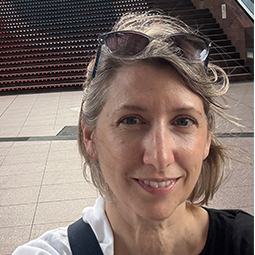
Amanda Wangwright is Associate Professor of Art History at the School of Visual Art and Design. She has published on a range of topics in twentieth-century Chinese art, including transnational patronage, conceptualizations of gender and the body, and visual modernism. Her first book, The Golden Key: Modern Women Artists and Gender Negotiations in Republican China (1911-1949), won a SECAC Award for Excellence in Scholarly Research and Publication.
Her research has been supported by the Taiwan Ministry of Foreign Affairs, the Metropolitan Center for Far Eastern Art Studies in Kyoto, Japan, the Chiang Ching-Kuo Foundation, and Emory University’s Bill and Carol Fox Center for Humanistic Inquiry. Recent scholarship includes a forthcoming article on the National Salvation Cartoon Propaganda Corps’ photographic publicity campaign during the Second-Sino Japanese War and a co-edited volume on twentieth-century transpacific cultural exchanges. She is currently working on a book on modern art in wartime China, ca. 1937–1949.
First Book Fellows 2026-2027
Melanie R. Holmes
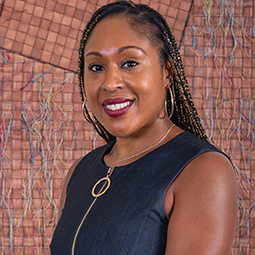
Melanie R. Holmes is Assistant Professor of History in the Department of African American Studies. Her research prioritizes the diverse regions, causes, and strategies of Black Power movements throughout the African Diaspora. Currently, she is completing her manuscript on Black Power in Barbados. She received her PhD in History with a specialization in the African Diaspora, and a certificate in Women’s Studies, at Howard University.
Dr. Holmes has three publications: “‘Black freedom fighters everywhere’: Barbados and Black Internationalism in the Transatlantic Battle for Black Power” (Journal of the South Carolina Historical Association, 2026); “Black Power in Britain: An Indictment Against the 1968 Race Relations Act” (Routledge, 2025); and “Black Power and the Slave Trade: How the Memory of Slavery Disrupted White Supremacy” (Madison Historical Review, 2023).
Emily Ruth Allen
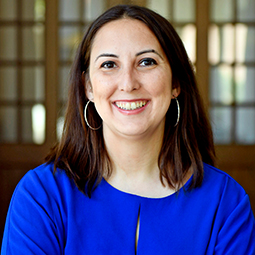
Emily Ruth Allen is Assistant Professor in the School of Music and Institute for Southern Studies. She earned her Ph.D. in Musicology from Florida State University. She is working on a book manuscript about Carnival parade musics in Mobile, Alabama, inspired by her experiences marching in the parades during her high school and college years. Her other interests lie in scholarly podcasting, which she currently pursues as a host for two podcasts, the New Books Network and Take on the South.
How to Apply
Applications are closed for the 2026-2027 academic year. New applications will be accepted in Spring 2027.
- Complete the Application Form and submit the following materials:
- A project narrative not to exceed 1,000 words that:
- describes the research project and its contribution to the field.
- describes your project’s approach to the humanities and its relevance to current humanities scholarship.
- details the current status of the project and what you plan to accomplish during the one-year term of the fellowship.
- describes how your active participation in the fellowship program and your engagement with an interdisciplinary community of scholars will benefit your research plan.
- Current CV
- An email from your department chair verifying support for one course release during the fellowship term. Letters can be sent to humcol@mailbox.sc.edu.
- Complete the Application Form and submit the following materials:
- A project narrative not to exceed 1,000 words that:
- describes the book manuscript and explains how this opportunity can benefit its development.
- describes the project’s approach to the humanities and its relevance to current humanities scholarship.
- details the current status of the manuscript and a schedule for completion.
- provides a tentative list of prospective off-campus invitees to the workshop.
- Current CV
- An email from your department chair verifying support for your application. Letters can be sent to humcol@mailbox.sc.edu.