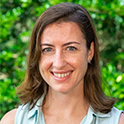
Corie Charpentier
I pursue research that assesses how and why coastal animals respond to environmental change. I use both field and lab techniques and am drawn to projects that link sensory biology and behavior to broader ecological questions.
The study of marine-life habitat, populations, and interactions among organisms and their surrounding environment. Areas of current research include: population genetics, phytoplankton physiology and ecology, primary productivity, microbial community structure and function, behavioral ecology, biodiversity, human impacts on coastal ecosystems, fisheries, invasive species and food web dynamics.
I pursue research that assesses how and why coastal animals respond to environmental change. I use both field and lab techniques and am drawn to projects that link sensory biology and behavior to broader ecological questions.

Past Director of the UofSC Genomics facility, Joe Jones's research has focused on conservation genetics, genetic connectivity, and genetics of rare populations (especially in fish and plankton); molecular phylogenetics and ecology, microbial ecology, natural history, and technology development. As the Faculty Principal of Green Quad, his most recent work connects this expertise to undergraduate and graduate hands-on learning experiences in aquaponics and heritage landrace propagation.

My general research interests are in marine ecology, particularly the influence of biological and physical factors on the community dynamics of coastal fauna and flora. I am especially interested in the influence of such factors on the distribution and movement of juvenile and adult stages of estuarine and coastal fishes and invertebrates, as well as the effects of habitat on the survival and growth of these organisms. I have pursued these interests through research efforts, often combining field and laboratory approaches, in a wide range of estuarine systems and the coastal ocean along the US Atlantic and Gulf coasts.
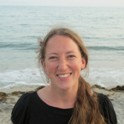
Marine ecosystems are heavily impacted by human activities, including climate change, fishing, offshore infrastructure, vessel traffic and pollution. Erin uses quantitative and computational tools to examine these influences on commercially valuable and at-risk species, including zooplankton, fish and marine mammals.
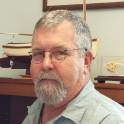
I'm a marine ecologist who studies how marine ecosystems work, especially in terms of how they process energy derived from microscopic plants (phytoplankton and microalgae). Most of my work is conducted in estuarine and coastal waters, including the Gulf of Mexico, San Salvador Island in the Bahamas, North Inlet Estuary on the South Carolina coast, and Galveston Bay, Texas.
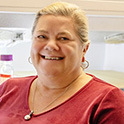
I study phytoplankton...the microscopic algae that give the ocean its greenish color and that photosynthesize, removing CO2 from the atmosphere. Specifically I'm interested in how light, nutrients, and temperature influence phytoplankton growth and taxonomic composition, including the development of "red tides" (harmful algal blooms).
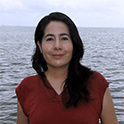
Dr. Romero’s research focuses on uncovering geochemical signatures in the ocean as archives of how marine systems function and respond to natural and anthropogenic events. She uses organic chemistry and isotopic tracers in diverse samples from natural environments, and experiments to study the source, transformation processes, and fate of molecules in marine systems.