School of the Earth, Ocean and Environment
Faculty and Staff Directory
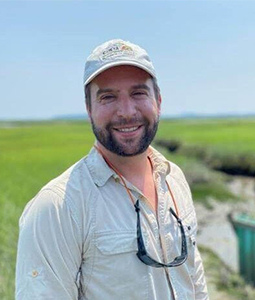
Matthew Costa
| Title: | Assistant Professor |
| Department: | Belle W. Baruch Institute for Marine and Coastal Sciences McCausland College of Arts and Sciences |
| Email: | costa@baruch.sc.edu |
| Phone: | 843-904-9026 |
| Office: |
BMFL, Room 127 Baruch Marine Field Lab |
| Resources: | Google Scholar |
Research Areas:
Biogeochemistry and Geochemistry; Climate Change; Conservation Biology; Marine Ecology; Sedimentology and Stratigraphy; Society, Policy, and Environment
Research:
Dr. Matthew T. Costa studies coastal wetlands and how sediment, water, plants, and microorganisms interact, leading to the build-up or loss of carbon from those sediments. Dr. Costa uses sediment core analysis, plant biology, isotope biogeochemistry, porewater chemistry, radioisotope dating, microbial genomics and environmental metabolomics, and manipulative field experiments to investigate the role of nutrient fluxes, sea-level rise, and other environmental drivers influence the functioning of coastal ecosystems. His work has a particular focus on understanding the mechanisms that underpin wetland carbon burial and vertical accretion over time, on the timescale of millennia through deep core analysis and in the rapidly changing coastal environment of the 21st century, with the goal of providing science-based restoration and management solutions.
He was previously a postdoctoral research associate at the Marine Science Center at Northeastern University, studying how different levels and types of nitrogen inputs affect salt marsh carbon sequestration and erosion vs. accretion. In earlier postdoctoral work in the Center for Climate Change Impacts and Adaptation at Scripps Institution of Oceanography (SIO), at UC San Diego, he measured the flow of carbon among coastal ecosystems in La Jolla, CA, and the sequestration of carbon in protected and restored wetlands across San Diego County. He conducted doctoral research at SIO on carbon storage in mangrove forests in the Americas, sampling across Panama, the Galapagos Archipelago, and Mexico, completing his doctoral dissertation, “Mangroves in depth: long-term carbon burial across spatial scales” in 2019.
Recent Publications:
Garces, K. R., M. A. Darsan, A. Moulton, M. T. Costa, J. L. Bowen, and A. R. Hughes. 2026. Nitrogen form alters root but not leaf endophyte communities and growth traits in a foundation plant. Fungal Ecology 83:101520. https://doi.org/10.1016/j.funeco.2026.101520.
Ward, M. M. T. Costa, A. M. Ricart, S. Crooks, L. M. Wedding, P. I. Macreadie. 2026. Blue carbon in an era of carbon accounting. Annual Review of Environment and Resources 51:In press. https://doi.org/10.1146/annurev-environ-121522-043142.
Janousek, C. N., J. R. Krause, J. Z. Drexler, K. J. Buffington, K. L. Poppe, E. Peck, M. F. Adame, E. B. Watson, J. Holmquist, … M. T. Costa, et al. 2025. Blue carbon stocks along the Pacific coast of North America are mainly driven by local rather than regional factors. Global Biogeochemical Cycles.
Leichter, J. J., L. B. Ladah, P. Parnell, M. D. Stokes, M. T. Costa, J. Fumo, P. K
Dayton. 2023. Persistence of southern California giant kelp beds and alongshore variation
in nutrient exposure driven by seasonal upwelling and internal waves. Frontiers in
Marine Science 10:1007789. https://doi:10.3389/fmars.2023.1007789.
Sternberg-Rodríguez, P., P. Ezcurra, M. T. Costa, O. Aburto, E. Ezcurra. 2022. Precision
of mangrove sediment blue carbon estimates and the role of coring and data analysis
methods. Ecology and Evolution 12(12):e9655. https://doi:10.1002/ece3.9655.
Costa, M. T., E. Ezcurra, O. Aburto-Oropeza, M. Maltz, K. Arogyaswamy, J. Botthoff,
and E. Aronson. 2022. Baja California Sur mangrove deep peat microbial communities
cycle nitrogen but do not affect old carbon pool. Marine Ecology Progress Series 695:15–31.
https://doi:10.3354/meps14117.
Costa, M. T., E. Ezcurra, P. Ezcurra, P. Salinas-de-León, B. Turner, J. Kumagai, J. J. Leichter, and O. Aburto-Oropeza. 2022. Sediment depth and accretion shape belowground carbon stocks across a range of climatic and geologic settings. Limnology & Oceanography. https://doi:10.1002/lno.12241.